How to Make a Gentle Banana and Oat Evening Smoothie for Kids
Updated: Jul 12

Evenings with young children can feel busy. Toys still need putting away, pyjamas cannot be found, and a child who seemed tired earlier may suddenly have enough energy for another hour of play.
As a mother of three and the founder of Kids Songs Learning Hub, I have found that the most helpful bedtime routines are usually the simplest ones. A familiar order, quieter activities, a story, a gentle song and a consistent bedtime can help children understand that the day is coming to an end.
Food may also need to be considered. Some children occasionally say they are hungry before bed, particularly if they ate little at their evening meal. In that situation, a small, age-appropriate snack may be reasonable.
This banana and oat smoothie is a simple family recipe made from familiar ingredients. However, it is important to be clear about what it can and cannot do.
This smoothie is not a sleep treatment, and it will not make every child fall asleep. It should be viewed as an occasional evening snack for a child who is genuinely hungry, not as a remedy for sleep difficulties.
The NHS recommends a calming, predictable routine that follows the same general pattern each night. If a child is hungry, it gives cereal and milk as one possible pre-bed snack and reminds parents to brush the child’s teeth afterwards.
Can a Smoothie Help a Child Sleep?

No particular smoothie can guarantee better sleep.
Bananas, oats and milk are nutritious foods, but eating them does not work like taking a sedative. Sleep is affected by many things, including:
the child’s age
daytime activity
naps
bedtime timing
hunger
illness
worries or anxiety
bedroom light and noise
screen use
individual sleep needs
The greatest value of an evening recipe may be the predictable family routine around it, rather than a special sleep-inducing effect from the ingredients.
HealthyChildren.org notes that familiar night time rituals, such as conversation, reading and songs, can help children move towards sleep.
For example, your routine might be:
Finish the evening meal.
Offer a small snack only if your child is still genuinely hungry.
Brush teeth.
Put on pyjamas.
Read a story.
Sing one gentle song.
Settle into bed at the usual time.
The smoothie should not become something your child believes they must have in order to sleep.
Important Dental Guidance
A blended fruit drink may seem healthier than sweets or fizzy drinks, but blending fruit releases sugars from its structure. Frequent exposure can increase the risk of tooth decay.
NHS guidance recommends limiting fruit juice and smoothies to a combined total of about 150ml per day and having them with a meal rather than sipping them between meals.
Because of this, the safest approach is to:
keep the portion small
serve it with or immediately after the evening meal where possible
avoid allowing a child to sip it slowly throughout the evening
brush the child’s teeth afterwards
offer only water after teeth have been brushed
The NHS advises brushing children’s teeth last thing at night and on one other occasion each day.
For toddlers, a simple solid snack such as plain cereal with milk, unsweetened yoghurt or another food recommended for your child may sometimes be a more tooth-friendly option than a fruit smoothie.
Who Is This Recipe Suitable For?
This recipe is intended for children who:
are over 12 months old
can safely drink from an open cup or suitable cup
have already tolerated every ingredient
do not have an allergy to milk, oats, bananas, almonds or other included foods
do not have a medically prescribed diet
can manage the texture safely
Babies under one should not be given almond, oat or rice drinks as a replacement for breast milk or infant formula. NHS guidance also says cow’s milk should not be used as a main drink before 12 months.
Ask your GP, health visitor, paediatric dietitian or other qualified professional before using this recipe if your child has:
a diagnosed food allergy
swallowing difficulties
reflux
diabetes or blood-sugar concerns
poor growth
a restricted diet
feeding difficulties
a medical condition affecting food or fluid intake
Allergy Safety
The original recipe used almond milk and almond butter. Almonds are tree nuts and can cause allergic reactions.
The NHS lists tree nuts, including almonds, among the foods that commonly cause food allergy.
Do not introduce a new allergen for the first time shortly before bed, when it may be harder to observe your child carefully.
Only use almond butter if your child has already eaten it safely and there are no allergy restrictions in your home, nursery or school setting.
Possible alternatives include:
dairy milk, if tolerated
an appropriate fortified alternative recommended for your child
plain yoghurt, if tolerated
omitting the nut butter completely
Always check labels because ingredients and cross-contamination warnings vary between products.
Seek urgent medical assistance if a child develops symptoms such as breathing difficulty, swelling of the lips or face, wheezing, collapse or a rapidly worsening reaction after eating.
Ingredients

This makes approximately one small child-sized serving. Adjust the quantity according to your child’s age, appetite and professional dietary advice.
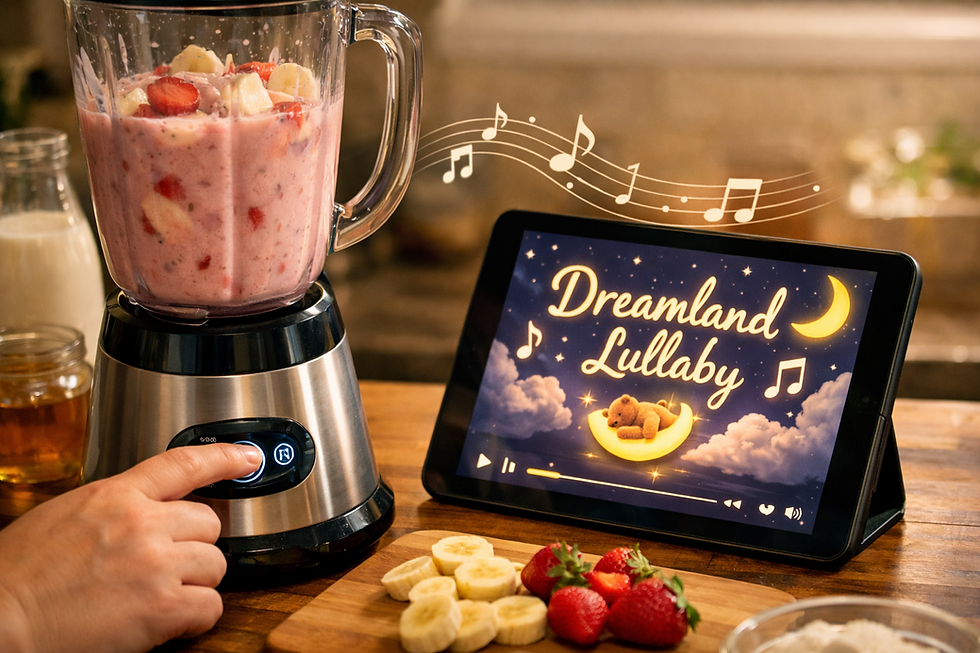 ½ small ripe banana
How to Make the Smoothie1. Check the ingredients Confirm that every ingredient is suitable for your child and has been tolerated before. Check the expiry dates and product labels, especially when allergies are a concern. 2. Blend the oatsPlace the rolled oats in the blender and pulse until finely ground. This creates a smoother texture, although the final drink should still be assessed for your child’s swallowing ability. 3. Add the remaining ingredientsAdd the banana, milk and optional smooth nut butter and cinnamon. Do not add:
Supplements and sleep products should never be added to a child’s drink unless prescribed or specifically recommended by an appropriately qualified professional. 4. Blend until smoothBlend until no visible pieces of oats or banana remain. Add a small amount of water if the mixture is too thick. 5. Check before servingMake sure:
6. Serve a small portionOffer the smoothie with the evening meal or as an occasional early-evening snack rather than immediately before lying down. Do not pressure your child to finish it. 7. Brush teeth afterwardsOnce the child has finished eating and drinking for the evening, brush their teeth with age-appropriate fluoride toothpaste. After brushing, offer only plain water. A Calmer Musical Evening RoutineThe song can be useful, but not because it releases sleep hormones or creates a guaranteed “Pavlovian response.” Its value is familiarity. Using the same gentle song at approximately the same point each evening can become a recognisable cue that active play is ending. Try this simple routine: Put awayUse a short clean-up song while putting toys away. PrepareLet your child help place the banana or oats near the blender. The adult should operate the blender unless the child is old enough and closely supervised. DrinkSit at the table rather than allowing the child to walk around with the cup. BrushUse your toothbrushing song after the snack. BookRead one familiar story. BedDim the lights, remove stimulating screens and sing one quiet lullaby. A children’s NHS sleep resource recommends reducing electronics around 30 to 60 minutes before bed and choosing calm activities such as reading, bathing or colouring. Original Sweet Dreams Routine SongThis short original song can be used without reproducing copyrighted lyrics:
Sing it slowly and quietly. Children do not need to learn every word. |

When Not to Offer an Evening Smoothie
Skip the smoothie when:
your child has already eaten enough
they are asking from habit rather than hunger
their teeth have already been brushed
they have vomiting, diarrhoea or swallowing difficulty
a clinician has given different dietary instructions
the ingredients are new
they have signs of an allergic reaction
drinking near bedtime worsens reflux or night-time wetting
it becomes a condition your child believes is necessary for sleep
A child who is thirsty after toothbrushing should generally be offered water.

What If My Child Regularly Says They Are Hungry at Bedtime?
Frequent bedtime hunger may mean the family’s meal and snack schedule needs reviewing.
Consider:
whether dinner is served very early
whether the child eats enough at dinner
whether drinks are filling them before meals
whether snacks are being offered too close to dinner
whether bedtime has become associated with requesting food
whether there are feeding, growth or sensory concerns
Young children often do well with regular meals and planned snacks rather than grazing continually. HealthyChildren.org describes a toddler routine that commonly includes three meals and one or two planned snacks.
Speak with a health visitor, GP or paediatric dietitian if your child is persistently hungry, losing weight, growing poorly, eating a very limited range of foods, waking repeatedly for food or showing other concerning symptoms.
Frequently Asked Questions
Will this smoothie make my child sleep?
No. It is a food recipe, not a treatment or sleep medicine.
A predictable bedtime routine may help children settle, but no smoothie can guarantee sleep.
Can toddlers drink this smoothie?
It may be suitable for some children over 12 months, provided all ingredients are appropriate and already tolerated. Keep the serving small and consider NHS dental guidance about serving smoothies with meals.
Can I use almond milk?
Only when it is appropriate for your child’s age and nutritional needs. Almond milk is not suitable as a main milk drink for babies under one and may not provide the same nutrients as cow’s milk.
Choose an unsweetened, fortified product where appropriate and seek professional advice if it is replacing dairy milk regularly.
Can I add tart cherry juice?
I would not include tart cherry juice in a routine children’s recipe. Evidence about sleep effects does not justify presenting it as a reliable sleep aid for children, and juice adds free sugars.
Can I add honey?
Never give honey to a baby under 12 months because of the risk of infant botulism.
For older children, the banana already adds sweetness, so honey is unnecessary.
Should my child drink it in bed?
No.
Serve it while your child is seated upright and supervised. Finish the drink before toothbrushing and before getting into bed.
Is it suitable every night?
I would not position a fruit smoothie as a required nightly sleep ritual.
Use it occasionally when your child is genuinely hungry and when it fits their overall diet. A varied evening routine should not depend on one particular food or drink.
Helpful Related Resources
Add links only to relevant pages that are currently published and working:
Remove the link to “how lullabies lower cortisol levels in toddlers” unless that article has been fully rewritten with appropriately cautious, well-supported health wording.
Final Thoughts
A banana and oat smoothie can be a simple occasional snack, but it should not be promoted as a natural sleep remedy.
For most children, the stronger bedtime signals are the familiar ones:
food and drinks finished
teeth brushed
screens turned off
lights lowered
one quiet book
one gentle song
a consistent bedtime
The recipe may be one small part of an evening, but the warmth, predictability and connection around the routine are what make it meaningful.
About the Author
Janerine Watson is the founder of Kids Songs Learning Hub, a mother of three, and a BSc Health and Social Care graduate. She creates children’s songs, printable activities and parent-friendly learning guides that help families use rhythm, repetition, routines and play in everyday life.
Through parenting and creating early-learning content, Janerine shares practical ideas for music, family routines, communication and playful learning. She does not present herself as a paediatric dietitian, sleep specialist or medical practitioner.
Nutrition, Allergy, Dental and Sleep Disclaimer
This recipe and article are provided for general educational and family-information purposes. They are not medical, dental, allergy, nutritional, feeding or sleep advice and are not a substitute for individual guidance from a qualified professional.
Food does not guarantee sleep, and this smoothie should not be used to treat insomnia, anxiety, night waking or another health concern.
Check that every ingredient is suitable for your child’s age, dietary needs, allergies and swallowing ability. Always supervise young children while eating and drinking. Introduce allergens in accordance with professional guidance and never give a child food containing a known allergen.
Fruit smoothies contain free sugars once fruit is blended and may contribute to tooth decay. Keep portions small, serve with meals where possible and brush teeth afterwards using age-appropriate fluoride toothpaste.
Speak with your GP, health visitor, paediatrician, paediatric dietitian, dentist or allergy specialist if you have concerns about your child’s diet, allergies, growth, feeding, swallowing, teeth, reflux or sleep.
Seek urgent medical help for breathing difficulty, facial or tongue swelling, collapse, severe wheezing or another suspected serious allergic reaction.
Sources and useful guidance




Comments