Best Road Safety Song for Kids: Twinkle Twinkle Traffic Light Lyrics and Activity
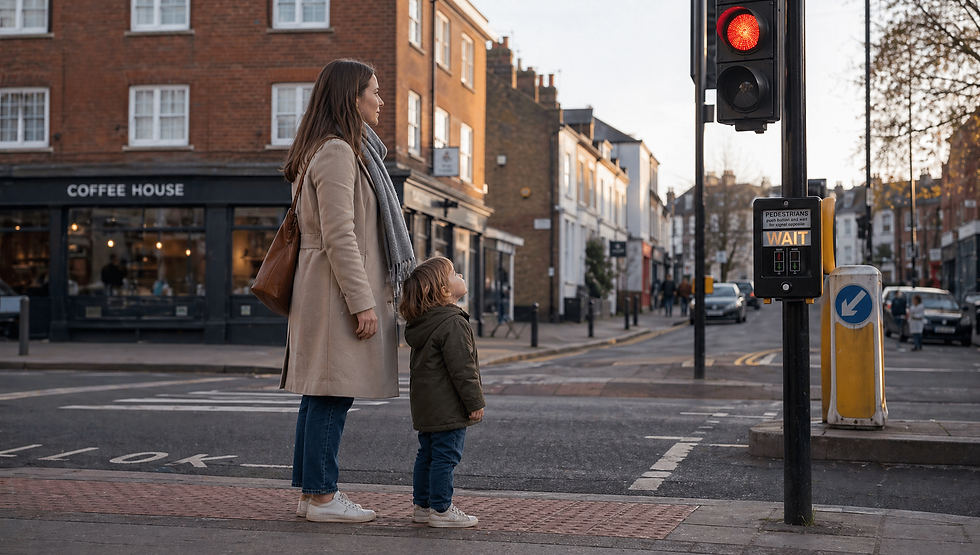
Teaching children how to stay safe near roads sounds simple until you’re actually out there with them.
I remember one afternoon on the way to the park. We reached the crossing like we always do, and I stopped. My child stopped too, but there was a pause. Not fear. Just uncertainty. That small moment told me something I hadn’t fully noticed before.
I had explained road safety plenty of times. I had said “wait for the green light” again and again. But it hadn’t settled in a way that felt natural to a child.
That’s when I stopped trying to explain it better and started thinking about how children actually learn.
Children often learn safety routines best when the words are simple, repeated often, and connected to real-life moments. A road safety song does not replace adult supervision, but it can give young children a familiar phrase to remember when they are near roads, crossings, driveways, car parks, or traffic lights.
At Kids Songs Learning Hub, we use songs to make everyday routines easier for children to understand. The goal is not to make children independent near roads. The goal is to help them listen, pause, notice colours, and practise safe habits with a trusted adult beside them.
Why Road Safety Doesn’t Always “Click” Right Away
For us, traffic lights are obvious. Red means stop. Green means go. It feels automatic.
For a toddler, it’s different. They’re still learning how the world works. They don’t always connect words to actions straight away, especially in busy, real-life situations.
They need more than instructions. They need something they can hold onto.
Something they can repeat.
Something that makes sense in their world.
Important safety note for parents: Toddlers and preschoolers should always be closely supervised near roads. Even if a child can sing the words “stop” and “go,” they are still too young to judge traffic speed, distance, or risk on their own. Use this song as a teaching tool, not as permission for a child to cross independently.
Why a Simple Song Can Make a Big Difference
Children naturally respond to rhythm. You see it in how quickly they pick up nursery rhymes or repeat phrases they hear in songs.
It’s not just about memorising. It’s about how the brain holds onto information.
A familiar tune gives them structure. Repetition gives them confidence. And before long, what started as a song becomes something they understand.
That’s why using the tune of Twinkle Twinkle Little Star works so well. It’s already part of their world.
Twinkle Twinkle Traffic Light Song (Simple Version)

Here’s a version you can start using right away:
Twinkle, twinkle traffic light
Shining brightly red and bright
Red means stop and wait right there
Yellow means wait, take care
Green means go, it’s safe to go
Now we cross the road just so
Simple child-friendly meaning:
Red means stop.
Yellow or amber means wait and take care.
Green means go only when a grown-up says it is safe.
For pedestrian crossings, also teach your child to look for the correct walking signal where you live. In the UK, this may be the green man. Always remind children that they cross with an adult, not just because a song says “go.”
It doesn’t have to be perfect. What matters is that you use it consistently and make it feel relaxed, not like a lesson.
How to Use This Song in Everyday Life
Use the same short safety phrase every time you practise:
Stop. Hold hands. Look. Listen. Wait. Cross with a grown-up.
Repeating the same phrase helps children remember the steps without feeling overwhelmed. You can say it slowly before singing the traffic light song.
This is where the real learning happens.
At the Crossing
When you reach a crossing, pause as you normally would. Instead of giving instructions, sing the song quietly together. Point to the lights as they change.
At first, your child will just listen. Then they’ll start joining in. After a while, they’ll begin to say the words before you do.
At Home

You don’t need anything complicated to practise.
A few simple ideas:
Draw a road and traffic lights on paper
Use toy cars to act out stopping and going
Let your child be the one who decides when it’s “safe”
Children learn a lot through play. When they take the lead, it sticks even more.
As Part of Your Routine
You don’t need long sessions or structured time.
Just use the song when it naturally fits into your day. Walking to school, going to the shop, heading to the park.
Those small, repeated moments make the biggest difference.
What You’ll Start to Notice Over Time
At first, it feels like you’re just singing.
Then something shifts.
Your child starts pointing at the lights. They say “stop” without being told. They wait, even when they’re excited to cross.
It’s a quiet kind of progress, but it matters.
They’re not just repeating words anymore. They’re understanding what those words mean.
Simple Traffic Light Activity You Can Try at Home

To make this easier for your child to understand, you can turn it into a quick hands-on activity.
Keep it simple:
Draw a large traffic light with red, yellow, and green circles
Write the words underneath: STOP, WAIT, GO
Let your child colour each section while saying the words out loud
This only takes a few minutes, but it helps reinforce what they’ve learned in a way that feels natural and engaging.
Building on This Approach
Once you see how well this works, it opens the door to other types of learning.
Children respond to music in so many areas, not just safety.
you’d like to keep building on this, you might also enjoy exploring nursery rhymes for early literacy, which follow a similar pattern and help children connect words with meaning.
Free Printable: Traffic Light Road Safety Activity Pack
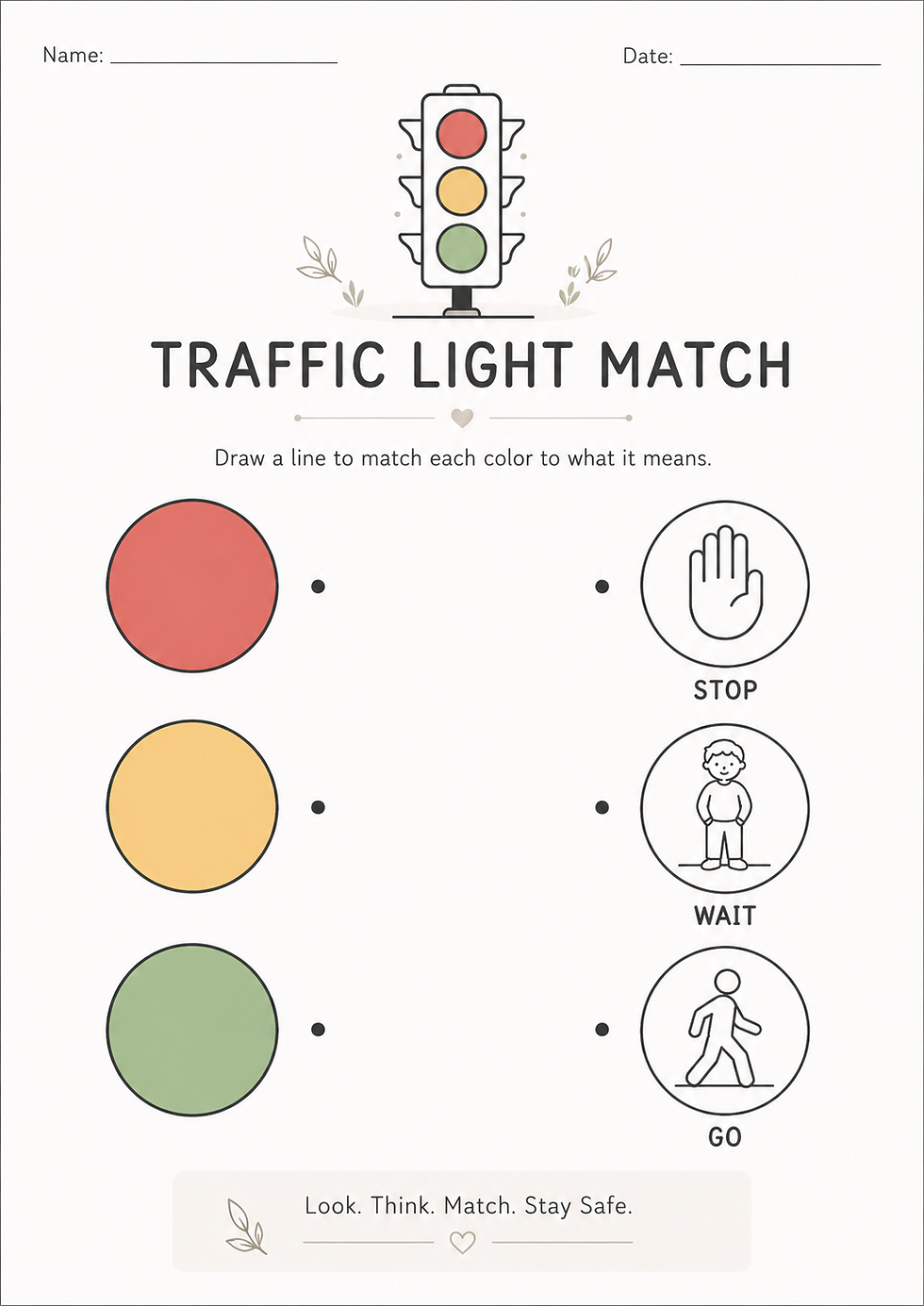
To help children practise this road safety song at home, I created a Traffic Light Road Safety Activity Pack. This printable gives toddlers and preschoolers a simple, hands-on way to colour traffic lights, match red, yellow, and green to stop, wait, and go, and practise road safety words through music and play.
Inside the printable, you’ll find:
✓ Traffic light colour and match activity
✓ Stop, wait, go practice page
✓ Road safety maze
✓ Circle the safe picture activity
✓ Draw and colour your own traffic light
✓ Twinkle Twinkle Traffic Light song page
You can download it from the Free Preschool Printables Library and use it alongside the song in this article.
DOWNLOAD: 👉free traffic light activity sheet
The printable includes a shorter version of the Twinkle Twinkle Traffic Light song for easy colouring and practice.
Helpful Related Resources
If your child enjoys learning through songs, visit our Nursery Rhymes page for videos, lyrics, and sing-along learning ideas.
For more early learning music ideas, read “Best Nursery Rhymes for Toddlers: 20 Songs That Support Early Learning.”
For movement-based learning, read “The Best Educational Songs for Kids That Get Them Moving and Learning.”
You can also visit the Free Preschool Printables Library for toddler activity sheets, song pages, routine charts, and preschool learning printables.
A Small Shift That Makes a Real Difference

Looking back, the biggest change wasn’t the song itself. It was the way I approached teaching.
Instead of repeating instructions and hoping they would stick, I started meeting my child where they were.
Simple. Familiar. Repetitive in a good way.
And that made all the difference.
Frequently Asked Questions
What is the traffic light song for kids?
It’s a short song set to a familiar tune that helps children understand what each traffic light colour means and how to respond.
At what age should children learn road safety?
Most children can begin recognising simple ideas like stop and go from around two or three years old, especially when learning through songs and play.
How do you teach road safety without overwhelming a child?
Keep it simple. Use repetition, point things out in real life, and build understanding gradually instead of expecting it all at once.
Why do songs help children remember safety routines?
Songs combine rhythm, repetition, and familiarity, which can make safety words easier for young children to remember. Children still need repeated practice, calm reminders, and close adult supervision near roads.
About the Author
Janerine Watson is the founder of Kids Songs Learning Hub, a mother of three, and a BSc Health and Social Care graduate. She creates music-based learning resources, children’s songs, printable activities, and parent-friendly guides that help toddlers and preschoolers learn through rhythm, repetition, movement, routines, and play. Through parenting and creating early learning content, Janerine has seen how songs can help children remember everyday routines in a calmer, more joyful way.
Road Safety Disclaimer
This article is for educational and family learning purposes only. Songs, videos, worksheets, and play-based activities can support road safety awareness, but they are not a substitute for close adult supervision, local road safety guidance, or responsible crossing practices. Children should always be accompanied by a responsible adult near roads, crossings, driveways, car parks, and traffic environments. Always follow the road safety rules and pedestrian crossing signals used in your local area.


Comments