Christmas Kindness Activities for Kids: Simple Songs, Giving and Family Ideas
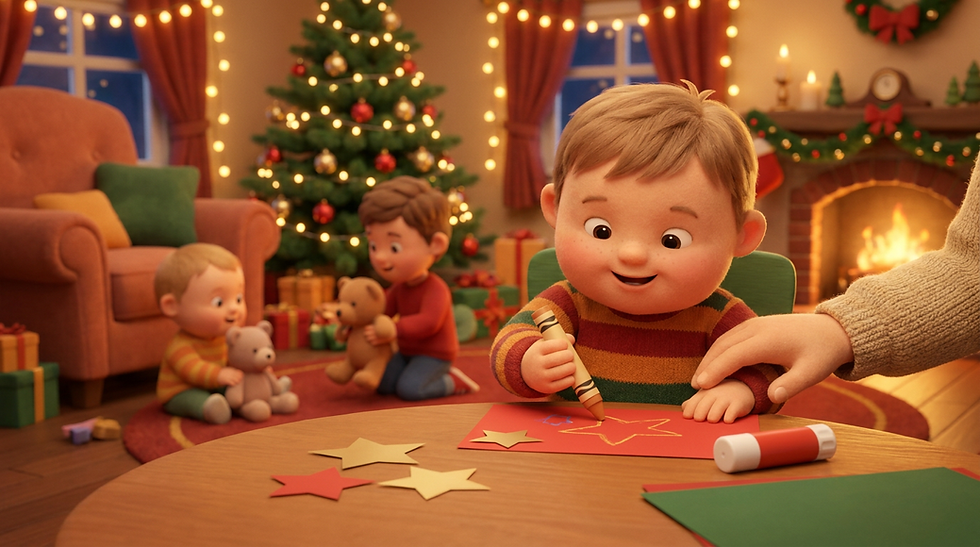
Christmas is a lovely time to help children notice kindness in simple, everyday ways. For toddlers and preschoolers, kindness does not need to be a big lesson. It can be as small as saying thank you, sharing a toy for a moment, helping tidy up, making a card, singing for someone, or using gentle hands.
At Kids Songs Learning Hub, we love turning meaningful moments into songs, routines, and playful activities. Young children often understand ideas better when they can sing them, act them out, repeat them, and see them happening in real life.
This guide shares simple Christmas kindness activities for kids, including songs, card-making ideas, family giving activities, helper jobs, gratitude prompts, and printable ideas.
The goal is not to make children perform kindness perfectly. The goal is to gently practise caring words, helpful actions, gratitude, sharing, and family connection in a way that feels warm, age-appropriate, and joyful.
A gentle note before you begin
Kindness should never feel forced or shaming. Young children are still learning how to manage feelings, share space, wait, take turns, and think about other people.
Some days your child may happily make a card for someone. Other days they may not want to share at all. That is normal.
Keep kindness activities short, gentle, and pressure-free. Model the behaviour first, sing the song, offer the idea, and let your child join in at their own level.
Why Christmas Is a Good Time to Practise Kindness
Christmas often brings family visits, gifts, food, songs, decorations, church events, school activities, and busy routines. These moments give children many simple chances to practise caring for others.
Children can learn kindness through:
Saying thank you
Helping with small jobs
Making something for someone
Sharing a song
Using gentle hands
Taking turns
Noticing when someone feels sad
Giving a card
Helping tidy up
Praying for someone, if that fits your family
For toddlers and preschoolers, kindness works best when it is concrete. Instead of saying only “be kind,” show them what kindness looks like.
You can say:
“Kind hands help pick up toys.”
“Kind words say thank you.”
“Kind hearts notice when someone needs help.”
“Kind feet walk slowly near the baby.”
“Kind voices sing gently.”
Christmas Kindness Song
Use this simple song throughout the activities:
Kind hands, kind words,
Kind hearts every day,
We can share a little love,
In a Christmas kind of way.
You can sing it before making a card, helping tidy up, choosing a gift, visiting family, or ending the day.
1. Make a Christmas Thank-You Card

A handmade thank-you card is one of the simplest Christmas kindness activities for young children. It helps children connect receiving with gratitude.
You need
Folded card or paper
Crayons
Large paper shapes
Glue stick
Stickers, optional
How to do it
Let your child colour the front of the card.
Ask who the card is for.
Write your child’s words inside.
Let your child add a drawing, sticker, or paper star.
Give or post the card together.
Simple words to model
“Thank you for my gift.”
“Thank you for helping me.”
“Thank you for visiting us.”
“I love you.”
Song to add
Thank you, thank you, kind and bright,
Christmas love feels warm and light.
A little card from me to you,
To say thank you for all you do.
Learning moment
Children practise gratitude, mark-making, emotional language, and giving.
Safety note
Adults should handle scissors. Avoid small buttons, beads, sequins, or loose glitter for toddlers.
2. Sing a Christmas Song for Someone
Children can show kindness by singing for someone they love. It could be a grandparent, neighbour, sibling, friend, teacher, church member, or someone who is unwell.
How to do it
Choose one simple song.
Practise it once or twice.
Let your child sing, clap, hum, dance, or hold a picture while you sing.
Keep it short and relaxed.
Good song choices
We Wish You a Merry Christmas
Twinkle Twinkle Christmas Star
Jingle Bells
A simple family-made song
Kindness idea
Record a short voice note or video only if your family is comfortable with that and privacy is respected.
Learning moment
This activity supports confidence, social connection, memory, and giving through music.
Safety note
Do not pressure shy children to perform. Clapping, waving, or holding a card can still be joining in.
3. Christmas Helper Basket

Create a small “helper basket” with simple jobs your child can do during Christmas routines.
Helper job ideas
Put napkins on the table
Place cards in a pile
Put crayons away
Carry a soft toy
Pass a safe item to an adult
Choose a Christmas song
Put paper in the recycling
Wipe a small area with a damp cloth
Simple helper song
Little helper, here we go,
Helping makes our Christmas glow.
One small job and then we say,
Thank you for your help today.
Learning moment
Children practise responsibility, routines, listening, and confidence.
Safety note
Do not let toddlers handle hot food, sharp tools, glass, candles, plugs, batteries, cleaning products, or breakable decorations.
4. Kind Hands Christmas Tree
Make a paper Christmas tree and add a paper handprint or heart each time your child practises a kind action.
You need
Large paper tree
Paper hearts or handprints
Glue stick
Crayons
How to do it
Place the tree on the wall or fridge.
When your child does a kind action, add a heart or handprint.
Say what the kind action was.
Keep the wording simple.
Examples
“You helped tidy the crayons.”
“You used gentle hands.”
“You said thank you.”
“You waited for your turn.”
“You gave Grandma your card.”
Song to add
Kind hands help and kind hearts grow,
Like a Christmas tree with lights aglow.
One kind choice, then one more too,
Christmas kindness starts with you.
Learning moment
Children connect actions with positive language and family encouragement.
Keep it gentle
Do not use the chart to shame or compare siblings. Use it to notice small efforts.
5. Choose One Toy to Share or Donate
For older preschoolers, Christmas can be a gentle time to talk about giving. This should be done carefully and without pressure.
How to do it
Explain that some children have fewer toys.
Ask if your child would like to choose one toy they no longer use.
Let them decide, with support.
Keep the choice simple and respectful.
Words to use
“This is your toy, so we will choose together.”
“Giving should feel kind, not scary.”
“You can choose something you are ready to share.”
Song to add
One small gift, one kind way,
Sharing love this Christmas day.
Gentle hearts and helping hands,
Kindness grows across the land.
Learning moment
Children begin to understand generosity, choice, empathy, and caring for others.
Important note
Do not force children to give away favourite toys. Forced giving can create stress instead of kindness.
6. Christmas Kindness Jar

A kindness jar is a simple family activity. Write small kindness ideas on paper strips and choose one each day.
Kindness ideas for young children
Say thank you
Help tidy toys
Make a card
Sing for someone
Give someone a hug if they want one
Share a book
Use gentle hands
Help set napkins
Pray for someone, if suitable for your family
Smile and wave
How to do it
Choose one kindness strip.
Read it aloud.
Do the activity together.
Add a sticker or colour a star when it is done.
Learning moment
Children practise routines, turn-taking, listening, and simple caring actions.
Safety note
Keep paper strips large enough and do not use tiny decorations inside the jar. Glass jars should be handled by adults. A plastic tub is safer for toddlers.
7. Kind Words Practice
Christmas can be busy, and children may need help practising kind words before family visits, school events, church activities, or playdates.
Kind words to practise
Please
Thank you
Can I have a turn?
Would you like one?
I’m sorry
Are you okay?
That was kind
I can help
Simple chant
Kind words, kind words,
What can we say?
Please and thank you,
Every day.
Activity idea
Use teddy bears or dolls to act out simple moments.
Teddy gives a present. Your child says thank you.
Teddy falls down. Your child asks, “Are you okay?”
Teddy wants a turn. Your child practises waiting.
Learning moment
Children practise social language, empathy, and everyday communication.
Keep it playful
Toddlers may only copy one word. That is enough.
8. Make a Kindness Card for a Neighbour or Family Member
This activity helps children think about someone outside their immediate routine.
Card ideas
Merry Christmas
Thank you
Thinking of you
You are loved
Have a joyful Christmas
Adults can write the words, and children can draw or colour.
Simple song
A little card, a little smile,
Kindness travels every mile.
Christmas colours, bright and true,
This card is made with love for you.
Learning moment
Children practise giving, creativity, and thinking about others.
Safety note
Adults should deliver cards if needed. Children should not approach neighbours or strangers without adult supervision.
9. Christmas Sharing Plate
A sharing plate can be used at snack time or family time. The idea is not to force sharing but to practise offering.
How to do it
Place safe snack pieces on a plate.
Let your child offer one to a family member.
Say:
“Would you like one?”
“Here you go.”
“Thank you.”
Learning moment
Children practise social language, turn-taking, food words, and generosity.
Safety note
Always supervise eating. Check allergies and prepare food in age-appropriate pieces. Do not use hard, round, sticky, chewy, or small foods for young children unless safely prepared.
10. Christmas Prayer or Reflection Moment

For faith-friendly families, a short Christmas prayer or reflection can help children connect kindness with love, gratitude, and caring for others.
Keep it simple and age-appropriate.
Simple prayer
Dear God, thank You for Christmas.
Help us use kind hands, kind words, and loving hearts.
Please bless our family and help us care for others.
Amen.
Simple reflection
Ask:
“Who can we be kind to today?”
“Who can we say thank you to?”
“Who needs a little love?”
Learning moment
Children practise gratitude, faith language, emotional awareness, and family reflection.
Keep it gentle
Young children do not need long explanations. Short, warm, repeated moments work best.
11. Kindness Through Christmas Songs
Songs can help children remember kind actions. You can sing while tidying, sharing, making cards, or helping at the table.
Try this simple song:
We can help at Christmas time,
With our hands and hearts so kind.
Tidy toys and share a smile,
Kindness makes the season bright.
Ways to use it
Sing before tidying.
Sing before making cards.
Sing before visiting family.
Sing after a kind action.
Learning moment
Children connect music, memory, routines, and caring behaviour.
12. Christmas Kindness Countdown
Create a simple countdown with one tiny kindness activity each day before Christmas.
Kindness countdown ideas
Day 1: Say thank you
Day 2: Make a card
Day 3: Help tidy toys
Day 4: Sing for someone
Day 5: Share a book
Day 6: Help set napkins
Day 7: Give a gentle hug if wanted
Day 8: Choose kind words
Day 9: Draw a picture for someone
Day 10: Pray for someone, if suitable
You can make the countdown as short as you like. It does not need to be 24 days.
Learning moment
Children practise repetition, anticipation, routines, and family kindness.
Safety note
Choose activities that are realistic for your child’s age and family situation.

Free Printable: Christmas Kindness Countdown
To make this article easier to use, add a free printable called Christmas Kindness Countdown for Kids.
Inside the printable, include:
✓ Christmas kindness song page
✓ Kind hands activity chart
✓ Thank-you card template
✓ Kindness jar ideas
✓ Christmas helper jobs checklist
✓ Kind words practice page
✓ Christmas kindness countdown
✓ My kind Christmas moment page
Helpful Related Resources
For festive songs, read Christmas Songs for Toddlers and Preschoolers.
For simple Christmas activities, read Christmas Activities for Toddlers at Home.
For printable learning pages, read Christmas Colouring Pages and Printable Activities for Kids.
For Christmas kitchen fun, read 15 Easy Christmas Kitchen Activities for Kids.
For more free learning pages, visit the Free Preschool Printables Library.
Frequently Asked Questions
How do I teach kindness to toddlers at Christmas?
Teach kindness through simple actions, not long lectures. Use gentle words, model kind behaviour, sing short songs, and give your child small ways to help, such as making a card, saying thank you, or helping tidy toys.
Should I make my child share Christmas toys?
No. Sharing should be gentle and age-appropriate. Children may need time to enjoy new gifts before sharing. You can model sharing, take turns with support, and praise small efforts without forcing it.
What kindness activities work for preschoolers?
Preschoolers may enjoy making thank-you cards, singing for family, choosing helper jobs, making a kindness jar, using kind words with teddy bears, helping set the table, or doing a short kindness countdown.
Can Christmas songs help children learn kindness?
Songs can help children remember simple words and routines. A kindness song can make caring actions feel playful and easier to repeat.
How do I stop kindness activities becoming pressure?
Keep them short and optional. Model the activity first, invite your child to join, and praise effort. Do not shame, compare, or force your child to give, share, hug, or perform.
Can Christian families include prayer?
Yes, if that fits your family. Keep prayers short, gentle, and age-appropriate. Focus on gratitude, love, caring for others, and using kind words and hands.
Final Thoughts
Christmas kindness does not need to be big or complicated. A child saying thank you, helping with napkins, making a card, singing for someone, or using gentle hands is already practising something meaningful.
Start small. Add a song. Notice the little moments. Keep it warm and pressure-free.
Kindness grows best when children see it, hear it, practise it, and feel it in everyday family life.
About the Author
Janerine Watson is the founder of Kids Songs Learning Hub, a mother of three, and a BSc Health and Social Care graduate. She creates music-based learning resources, children’s songs, printable activities, and parent-friendly guides that help toddlers and preschoolers learn through rhythm, repetition, movement, routines, and play.
Through parenting and her background in health and social care, Janerine shares practical ways families can make everyday routines, seasonal activities, kindness moments, and early learning more playful, realistic, and easier to repeat.
Child Safety and Activity Disclaimer
This article is for general family learning, music, kindness, faith-friendly, and activity purposes only. It is not medical, developmental, childcare, therapy, safeguarding, religious instruction, or educational advice.
Always supervise toddlers and preschoolers during craft, food, sensory, movement, pretend play, visits, and giving activities. Adapt every activity for your child’s age, development, allergies, sensory needs, communication, mobility, attention, and safety awareness.
Children should never be forced to hug, perform, give away belongings, or share in a way that causes distress. Keep kindness activities gentle, respectful, and age-appropriate.
Keep small parts, beads, bells, buttons, batteries, magnets, sharp tools, cords, strings, loose ribbons, broken decorations, hot items, cleaning products, and choking hazards away from young children.
If you have concerns about your child’s development, behaviour, emotional wellbeing, communication, or safety, speak with a qualified professional.


Comments