Owl Facts for Kids: Night Creatures Explained with Songs & Activities
Updated: Jun 16

Introduction: Why Kids Are Fascinated by Owls 🌙
The first time my youngest asked me, “Mama, why do owls stay awake when I sleep?” it was already past bedtime. The room was quiet, the lights were low, and somehow that question felt magical like a tiny doorway into curiosity about the night world.
Owls have a special way of capturing children’s imagination. They’re mysterious but gentle, quiet yet powerful, and just different enough from daytime animals to spark endless questions.
Over the years, as a mom of three, I’ve learned that owls are among the best animals for introducing science, nature, and early learning concepts to young children, especially when paired with songs, stories, and hands-on activities.
In this guide, we’ll explore owl facts for kids in a way that’s:
Easy to understand
Scientifically accurate
Playful and engaging
Supported by songs, videos, and activities
We’ll also show you how to turn owl learning into music-based discovery, using trusted child-friendly videos from our own learning channel and simple activities you can do at home or in the classroom.
What Is an Owl? A Kid-Friendly Explanation 🦉

An owl is a bird but not just any bird.
Owls are nocturnal birds, which means they are most active at night. While most birds sleep after sunset, owls are just waking up and heading out to hunt.
From my experience creating animal songs for toddlers and preschoolers, kids understand this concept best when we compare owls to themselves:
“You wake up in the morning owls wake up at night.”
That simple contrast sticks.
Basic Owl Facts for Kids:
Owls are birds
They have feathers, wings, and beaks
They lay eggs
They can fly
Most owls are awake at night
According to National Geographic Kids, there are over 200 different owl species around the world, living in forests, deserts, grasslands, and even near cities.
Why Are Owls Awake at Night? 🌌
Owls are nocturnal because their bodies are specially designed for nighttime life.
Night Vision Superpowers 👀
Owls' eyes are very big and let in more light than our eyes do. In the dark, this helps them see well.
"Owls wear built-in night goggles" is something I often say when I teach this to little kids.
Kids get it right away.
Silent Flyers 🕊️
Owls have special feathers that help them fly quietly. This allows them to sneak up on their food without being heard.
This is a great opportunity for movement + music learning:
Walk loudly like a daytime bird
Tiptoe quietly like an owl
Add a slow, quiet song to reinforce the idea
Owl Hearing Is Incredible 👂
Owls can hear tiny sounds even under leaves or snow. Some owls have slightly uneven ears, helping them locate sounds more precisely.
According to the Cornell Lab of Ornithology, owls rely heavily on hearing to hunt successfully.
What Do Owls Eat? 🍽️

Owls are carnivores, which means they feed on other animals.
Depending on the owl species, they may eat:
Mice
Insects
Frogs
Fish
Small birds
For kids, this can sound intense so I always keep the explanation gentle and factual.
“Owls eat what they need to stay healthy, just like we eat fruits and vegetables.”
Songs help soften complex ideas and keep learning age-appropriate.
How Owls Help the Environment 🌱

Owls play an important role in nature by keeping animal populations balanced.
When owls eat rodents, they help farmers and ecosystems by preventing overpopulation. This is a wonderful moment to introduce cause and effect, a key early science skill.
The U.S. Fish & Wildlife Service highlights how birds of prey help maintain healthy ecosystems.
Why Owl Facts Are Perfect for Early Learning 🧠

After years of testing animal songs with toddlers and preschoolers, I've found that owl themes help kids learn in a lot of different ways at once.
Language Development
Children learn new vocabulary:
Nocturnal
Silent
Feathers
Wings
Night
Science Concepts
Owls introduce:
Day vs. night
Animal adaptations
Habitats
Food chains
Emotional Learning
Owls often represent:
Calm
Wisdom
Quiet observation
This makes them ideal for bedtime learning, calm-down routines, and nighttime songs.
Learning About Owls Through Songs 🎶

Music turns facts into memories.
I’ve seen children remember owl facts weeks later simply because they learned them through song.
Why Songs Work (From Experience)
From writing and testing dozens of educational songs, I’ve noticed:
Repeating melodies helps shy children participate
Animal sounds encourage singing
Simple beats can help kids remember things.
When kids sing about owls:
They repeat vocabulary naturally
They engage emotionally
They stay focused longer
🎥Watch and Learn: Animal Videos and Owl Songs

Explore child-safe, educational animal learning videos on our melody video channel here:
These videos are designed to:
Reinforce learning through music
Use slow pacing and clear visuals
Support toddlers, preschoolers, and early learners
Owl Activities for Kids (Hands-On Learning) ✂️
🖍️ Activity 1: Owl Craft
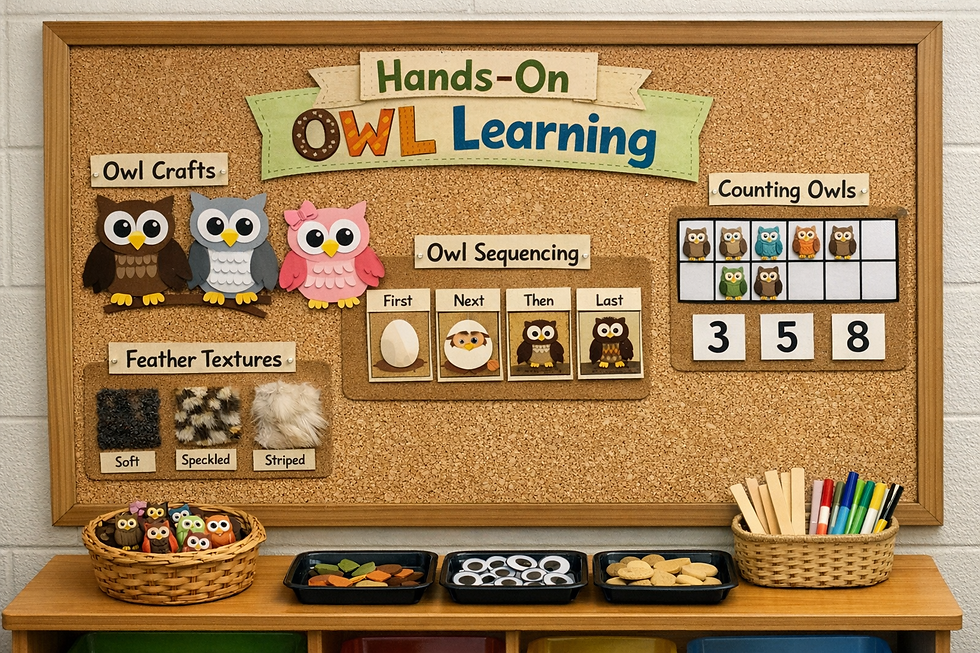
This builds:
Fine motor skills
Creativity
Shape recognition
🎶 Activity 2: Owl Movement Song

Sing a song with a slow beat:
Flap arms quietly
Turn heads slowly
“Listen” for sounds
This supports:
Body awareness
Listening skills
Self-regulation
🌙 Activity 3: Day vs. Night Sorting Game

Create picture cards of:
Sun
Moon
Owl
Dog
Your child can sort:
Day animals
Night animals
Using Owl Learning at Home & School 🏫

At Home
Read owl books before bed
Sing calm animal songs
Watch short educational videos together
Ask open-ended questions
In the Classroom
Circle-time owl songs
Owl-themed science units
Feather sensory bins (with an adult present)
I have observed educators using owl songs to help children achieve tranquillity during transitions between activities.
Frequently Asked Questions 🦉

Are owls dangerous to kids?
No. Wild owls avoid humans and are not a threat to children.
Can toddlers learn animal science?
Yes! Science is easier to understand and more fun when it's taught through songs, pictures, and games.
Are owl songs good for bedtime?
Absolutely. Owl themes naturally support calm, nighttime routines.
Conclusion: Owls Make Learning Magical 🌟

Owls teach children that the world doesn’t stop when the sun goes down it simply changes.
Owl facts turn into more than just facts when you use music, videos, stories, and activities. They turn into connection, curiosity, and trust.
As a parent, teacher, or caregiver, you can help kids learn by integrating music with owls.
Build language
Understand science
Feel calm and curious
Fall in love with learning
And that’s exactly what we aim to support at Kids Songs Learning Hub making learning joyful, memorable, and meaningful.

👩🏫 Author Bio
is the founder of Kids Songs Learning Hub and a mother of three. She holds a BSc in Health and Social Care and discovered through raising her own children that music is one of the most effective tools for helping toddlers listen, cooperate, and thrive. When she's not researching songs, you'll find her covered in toddler finger paint and singing along.

⚠️ Disclaimer
The information in this article is for learning and informational purposes only and is not intended as a substitute for professional medical, developmental, or educational advice. Every child develops at their own pace, and learning strategies may vary.
If you're worried about your child's speech, behavior, or development, talk to a skilled pediatrician, speech-language pathologist, or early childhood expert. Kids Songs Learning Hub is not responsible for any consequences that may result from the use of this information.


Comments