Silly Songs Your Preschooler Will Love (and Why They Matter for Learning)

Every family has those songs that make children laugh before the first verse is even finished. In my house, silly songs often appear during car journeys, rainy afternoons, kitchen dance parties, tidy-up time, and those tricky moments when everyone needs a reset.
Preschoolers love songs that are funny, surprising, noisy, dramatic, or a little bit ridiculous. A song about strange food combinations, slippery fish, cheeky monkeys, or a pretend animal hunt can quickly turn a restless mood into laughter. But silly songs can do more than entertain. When used gently and playfully, they can support language, listening, movement, memory, confidence, and social connection.
As a mother of three and the founder of Kids Songs Learning Hub, I have seen how music can make everyday learning easier to repeat. Children are often more willing to try new words, actions, sounds, and ideas when they are laughing and joining in rather than feeling tested.

This article shares silly preschool songs children enjoy, why they can support early learning, practical ways to use them at home or in a preschool setting, a simple weekly plan, FAQ, and a free Silly Song Learning Pack printable.
Why Silly Songs Help Preschoolers Learn

Preschool learning does not only happen through worksheets or flashcards. Young children learn through play, repetition, movement, imitation, conversation, and joyful connection. Silly songs bring many of those things together in one simple activity.
Silly songs can help children:
Practise new words in a fun way
Hear rhyme, rhythm, and sound patterns
Remember repeated phrases
Use actions and movement
Take turns during call-and-response songs
Build confidence through playful singing
Explore feelings, humour, and imagination
Join group time without pressure
The silliness matters because it lowers the pressure. A child who feels shy about speaking may be more willing to roar like a lion, whisper like a mouse, clap like a monkey, or invent a funny food combination in a song.
Silly Songs Learning Table
Learning area | How silly songs can help | Simple example |
Language | Children hear and repeat new words | Name animals, food, actions, sounds |
Rhyme | Children hear words that sound alike | Bay, hay, play, day |
Memory | Repeated verses help children remember patterns | Same tune, new silly words |
Listening | Children wait for a cue or missing word | Pause before the funny word |
Movement | Actions support coordination and body awareness | Clap, stomp, wiggle, freeze |
Confidence | Funny singing feels safe and playful | Make a silly voice or animal sound |
Creativity | Children invent new verses | “Broccoli ice cream” or “banana soup” |
Social skills | Group singing supports turn-taking | One child chooses the next verse |

8 Silly Preschool Songs Your Child Will Love

These songs are popular because they are repetitive, playful, and easy for children to join. You do not need to sing them perfectly. The goal is participation, laughter, and language play.
1. “Do You Like Broccoli Ice Cream?”
This song is funny because it mixes foods that do not usually go together. Children love deciding whether a combination sounds yummy or silly.
Learning idea: Ask your child to invent a pretend food combination, such as banana pizza, carrot cake soup, or popcorn pancakes. Keep it pretend and playful.
Skills practised: Vocabulary, descriptive language, imagination, yes-or-no answers, and conversation.
2. “Slippery Fish”
This song uses a repeated pattern and sea animal vocabulary. Children can make swimming actions, tiny fish actions, big fish actions, or funny ocean sounds.
Learning idea: After singing, ask, “Which sea animal came first?” or “Can you move like a tiny fish?”
Skills practised: Sequencing, animal words, movement, listening, and memory.
3. “Hickory Dickory CRASH!”
This playful twist on a clock rhyme uses surprise and sound effects. Children enjoy the unexpected “crash” moment and often want to repeat it.
Learning idea: Use different animals going up the clock. A mouse can tiptoe, a cat can creep, and an elephant can stomp.
Skills practised: Time words, animal vocabulary, sound effects, rhythm, and anticipation.
4. “If All the Raindrops…”
This song invites children to imagine strange and funny things falling from the sky. It is a lovely way to encourage “what if” thinking.
Learning idea: Ask, “What would you like the raindrops to be?” Let your child choose silly answers.
Skills practised: Creative thinking, descriptive language, imagination, and sentence building
5. “Down By the Bay”
This song is excellent for rhyme play because children can invent funny rhyming pairs. It does not matter if every rhyme is perfect. The playful attempt is part of the learning.
Learning idea: Give your child one word and help them find a rhyme. For example, cat and hat, dog and frog, bee and tree.
Skills practised: Rhyme awareness, word play, listening, and early literacy.
6. “Sticky Sticky Bubblegum”
This song is fun because children imagine bubblegum getting stuck in silly places. It works well with actions and exaggerated facial expressions.
Learning idea: Sing slowly and let your child choose where the bubblegum gets stuck next, such as hands, knees, shoes, or elbows.
Skills practised: Body vocabulary, listening, attention, movement, and humour.
7. “ The Five Little Monkeys Swinging in a Tree”
This counting song uses repetition, suspense, and a dramatic animal moment. Children can count down with fingers and join in with the repeated phrases.
Learning idea: Use five fingers as monkeys and make a gentle snapping action with the other hand. Keep movements safe and playful.
Skills practised: Counting down, sequencing, hand actions, rhythm, and prediction.
8. “Going on a Lion Hunt”
This song works well because it feels like a story. Children move through pretend places, repeat phrases, and use their bodies to act out the journey.
Learning idea: Create a living room version with pretend grass, mud, water, and a cave using cushions and blankets.
Skills practised: Story sequence, movement, imagination, positional language, and listening.
How to Make Silly Songs More Useful for Learning
Add actions
Use clapping, stomping, wiggling, whispering, pointing, and safe small movements. Actions help children join in even when they do not know all the words.
Pause and let your child fill in the word
Try stopping before the funny word or rhyme. This gives your child a chance to remember, predict, and speak.
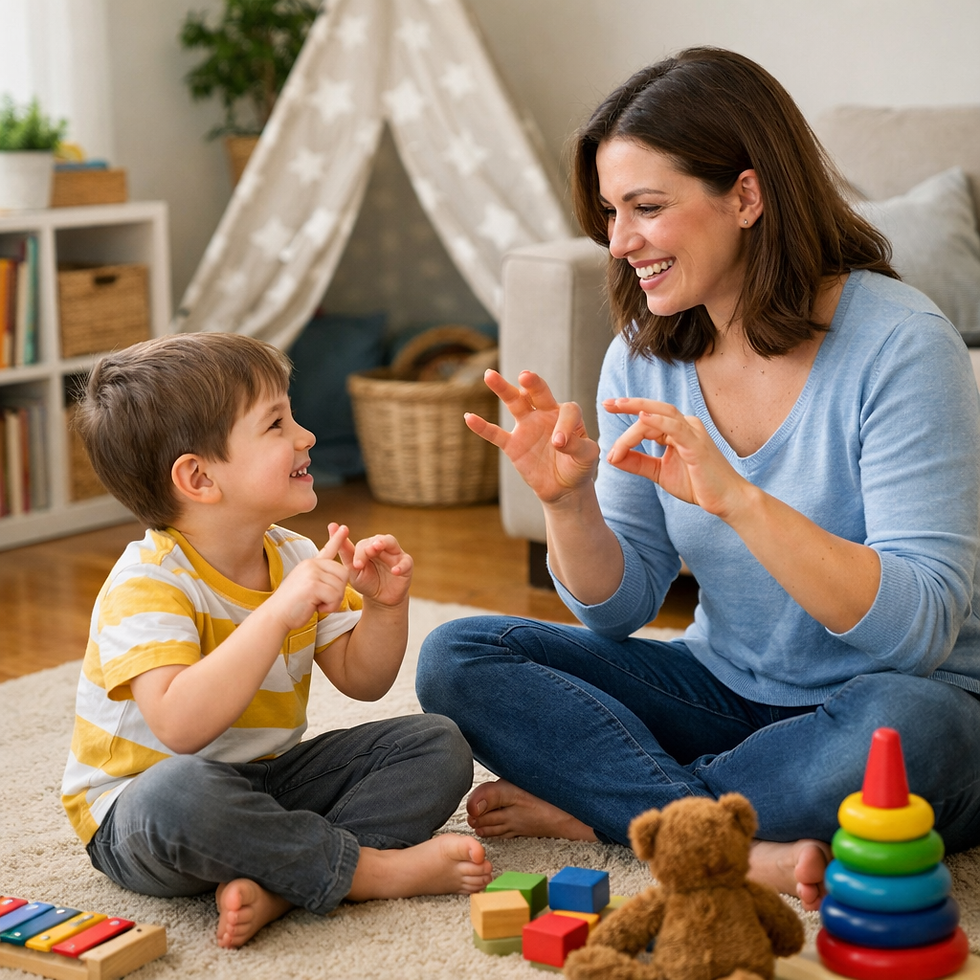
Let children choose a silly verse
Ask, “What animal should we sing about next?” or “What silly food should we make?” Choice helps children feel involved.
Connect the song to real play
After an ocean song, play with sea animal toys. After a food song, draw pretend silly foods. After a lion hunt, make a pretend jungle path.
Repeat favourites
Children often need to hear the same song many times before they join in fully. Repetition builds confidence.
Keep it pressure-free
If your child only listens, laughs, claps, or says one word, that still counts as participation.

Simple Weekly Silly Song Plan
Day | Song focus | Activity idea |
Monday | Funny food song | Invent a pretend food combination |
Tuesday | Ocean song | Move like sea animals |
Wednesday | Clock or animal song | Add sound effects |
Thursday | Rhyme song | Make silly rhyming pairs |
Friday | Bubblegum song | Name body parts |
Saturday | Counting song | Count down with fingers |
Sunday | Adventure song | Create a pretend hunt around the room |
Try This Printable Activity

Free Printable: Silly Song Learning Pack
To make these silly songs easier to use at home or in a preschool setting, download the free Silly Songs Preschool Learning Pack. This printable helps children choose funny song prompts, add movement, build confidence, and enjoy music-based learning through play.
Inside the printable, you will find:
✓ Silly Song Spinner
✓ Sing it loud, whisper quiet, freeze and sing, and funny voice prompts
✓ Movement cards such as jump like a monkey, spin like a bus wheel, wiggle like jelly, and crawl like a spider
✓ Simple parent and teacher guide
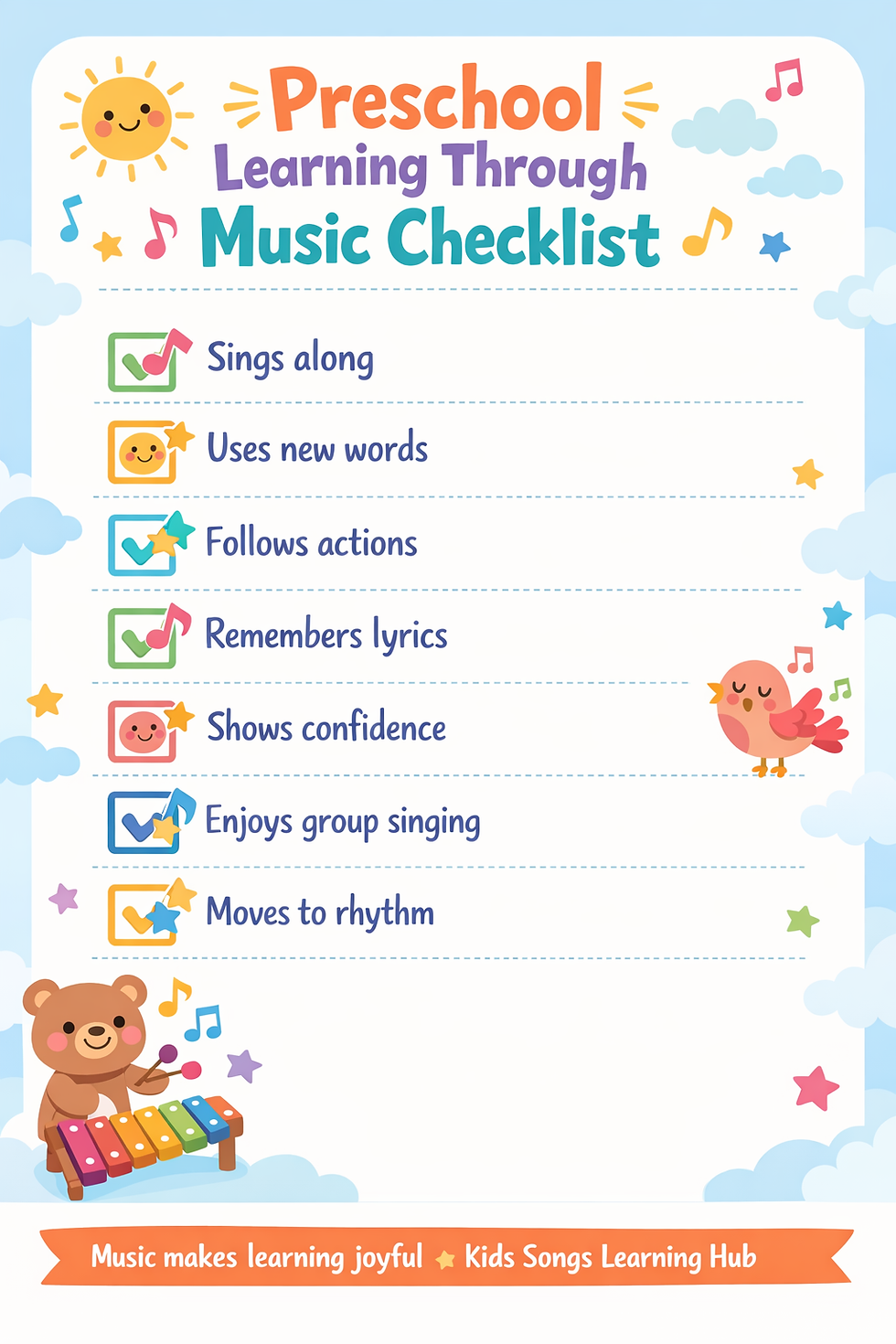
✓ Preschool learning through music checklist
Helpful Related Resources
For kindness and social-emotional songs, read “Little Helpers, Big Hearts: Songs to Teach Kindness and Empathy.”
For shape songs, read “Shape Songs for Kids: Fun Ways to Teach Circles, Squares, and Triangles Through Music.”
For movement songs, read “Exercise Songs for Kids: Fun Movement Songs That Get Children Moving.”
You can also visit the Free Preschool Printables Library for song cards, routine charts, alphabet pages, and preschool learning activities.
Frequently Asked Questions
At what age can I start using silly songs?
You can sing gentle silly songs with babies, toddlers, and preschoolers. Preschoolers often enjoy adding their own words, actions, rhymes, and funny voices.
Do silly songs help with school readiness?
Silly songs can support skills that are useful for school, such as listening, vocabulary, rhyme awareness, turn-taking, memory, movement, and confidence. They should be used as playful support, not as a test or formal lesson.
What if my child only wants the same silly song every day?
That is normal. Repetition helps children feel confident. You can keep the same song but change one small part, such as the animal, voice, action, or silly word.
What if my child does not like singing?
Let your child clap, move, point, make a sound effect, or choose the next verse instead. Children can join music in many ways without singing every word.
Are silly songs suitable for preschool classrooms?
Yes, when used calmly and intentionally. They can work well for circle time, transitions, movement breaks, language activities, and group connection. Keep volume and movement safe for the space.
Final Thoughts

Silly songs are not just background noise. They give children a playful place to try words, sounds, rhymes, actions, ideas, and feelings. They can help a shy child join in, help a restless child move, or help a tired group reset with laughter.
The best part is that silly songs do not need to be complicated. Start with one song your child already enjoys. Add a funny voice, a missing word, a silly action, or a new verse. Let your child laugh, repeat, change the words, and make the song their own.
When learning feels joyful and safe, children are more likely to come back to it again and again.

About the Author
Janerine Watson is the founder of Kids Songs Learning Hub, a mother of three, and a BSc Health and Social Care graduate. She creates music-based learning resources, children’s songs, printable activities, and parent-friendly guides that help toddlers and preschoolers learn through rhythm, repetition, movement, routines, and play. Through parenting and her background in health and social care, Janerine shares practical ways families can make everyday learning more playful and easier to repeat.
Educational and Child Development Disclaimer
This article is for educational, parenting, and family learning purposes only. It is not medical, developmental, psychological, therapeutic, speech-language, or educational assessment advice. Every child learns at their own pace, and not every activity will suit every age, need, temperament, or home situation.
Always supervise children during movement songs, group activities, outdoor play, small-object play, and any activity involving props. Keep movement safe for the space and adapt songs for your child’s age, abilities, sensory needs, communication style, and developmental stage.
If you have concerns about your child’s speech, hearing, communication, learning, behaviour, sensory needs, development, or school readiness, please speak with your GP, health visitor, paediatrician, nursery team, teacher, speech and language therapist, occupational therapist, or another qualified professional.


Comments